How to Tell If Your Attic Insulation Has Rodent Contamination
The real visual, smell, and sound signs of rodent activity in cellulose insulation, and why DIY inspection should stop at look, don't touch.
Why This Is Worth Figuring Out Before You Call Anyone
Most homeowners don't think about their attic insulation until something tips them off — a sound at night, a smell that won't go away, or a stain they weren't expecting to see. If you're reading this because one of those things happened, the goal here is to help you understand what you're actually looking at before you decide what to do about it. Cellulose insulation is loose-fill, paper-based material, and it happens to be exactly the kind of soft, warm, easy-to-tunnel-through environment that mice and rats treat as ideal nesting territory. Once rodents move in, the insulation itself becomes part of the problem in ways that aren't always obvious from a quick glance through the attic hatch.
This isn't a page trying to sell you on a service before you know what you're dealing with. It's a walkthrough of the actual signs — what to look for, what to smell for, what to listen for — so you can make an informed decision about whether what's happening in your attic needs a professional look.
The Visual Signs
Droppings are the most direct evidence. Mouse droppings are small, dark, and pellet-shaped, often scattered across the insulation surface or concentrated along the paths rodents travel repeatedly — usually near the perimeter, along joists, or clustered around an entry point. Rat droppings are larger and similarly dark. If you see them in one spot, there's usually a trail, not an isolated incident.
Urine staining shows up as dark, sometimes slightly greasy-looking discoloration on the insulation surface, and it's often concentrated in the same areas as droppings since rodents tend to use consistent paths and nesting spots. Nesting material is another giveaway — shredded insulation, fabric, or paper balled up into a compact mound, usually tucked into a corner, against a chimney chase, or wherever the space feels most protected. And if you look closely at the insulation surface itself, you may notice matted-down trails or tunnels running between joists — flattened, compressed paths that don't match the surrounding texture, worn in by repeated foot traffic.
- Droppings — pellet-shaped, dark, often clustered along a repeated path
- Urine staining — dark, sometimes greasy-looking discoloration on the insulation surface
- Nesting material — shredded insulation or debris balled into a mound in a corner or protected spot
- Matted trails or tunnels — flattened paths running between joists where the surface texture doesn't match the surrounding insulation
The Smell and Sound Signs
Sometimes the insulation itself is hard to see clearly, especially in a poorly lit attic or one that isn't easily walkable, and the smell or sound gets there first. A sharp, ammonia-like odor is a strong indicator of an active or ongoing rodent presence — it comes from accumulated urine, and it tends to get more noticeable the longer an infestation has been going on. If that smell is detectable from inside living space below the attic, not just when you open the hatch, that's usually a sign the contamination has been building for a while.
Scratching, scurrying, or light thumping sounds in the ceiling — especially in the evening or overnight, when rodents are most active — are often the very first sign homeowners notice, well before they ever go up to look. If you're hearing movement in the ceiling on a regular basis, it's reasonable to assume there's something to find up there even before you climb up with a flashlight.
Look, Don't Touch
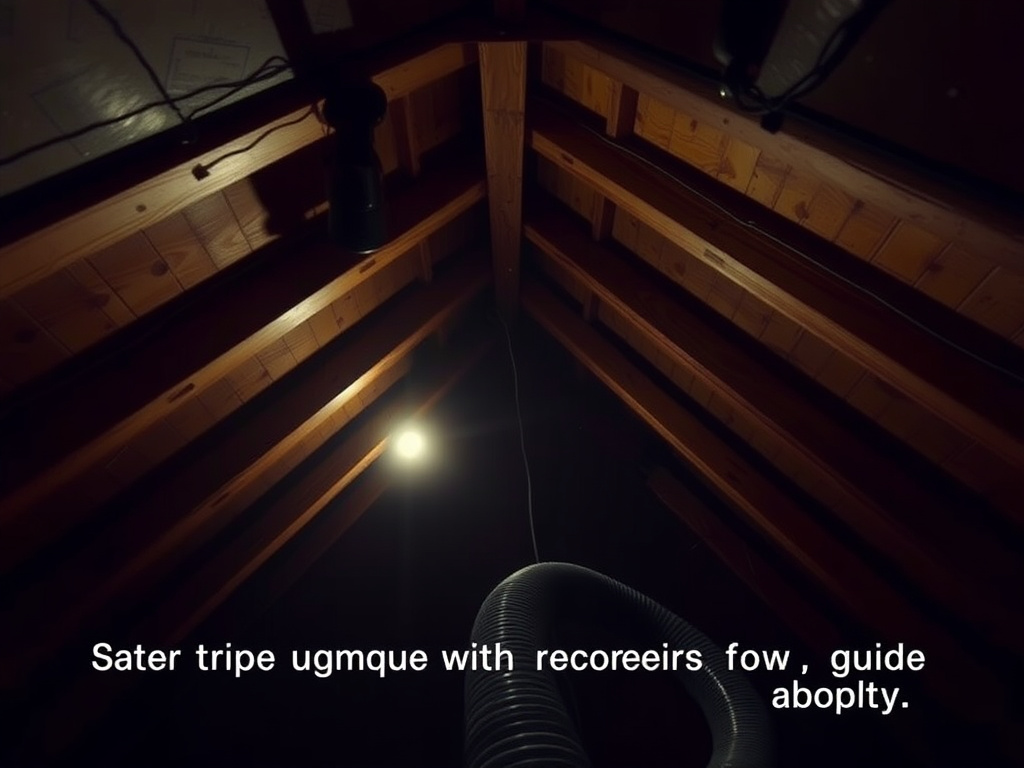
If you go up to check, the most important rule is to observe without disturbing anything. Don't rake through the insulation, don't try to vacuum it with a household or shop vac, and don't handle droppings or nesting material directly. Dried droppings and urine-contaminated material can release airborne particles when they're disturbed, and a standard vacuum isn't built to contain what it picks up — it just recirculates fine particles right back into the air you're breathing. This is exactly the situation that professional-grade PPE and sealed, HEPA-filtered extraction equipment exist for.
The practical version of this advice is simple: note what you see, take a photo if you can do it without getting closer than feels comfortable, and stop there. There's no version of this problem where doing more yourself makes things easier or cheaper down the line — disturbed contamination just spreads the same problem over a wider area.
What a Professional Assessment Actually Covers
A real inspection goes further than confirming that rodents have been present. It typically maps how much of the attic floor is actually affected versus how much insulation is still clean, checks for entry points rodents are using to get in and out, and looks at the condition of the framing and decking underneath the contaminated insulation, since urine exposure over time can affect wood surfaces as well as the insulation sitting on top of them.
That assessment is what turns into an honest scope and quote — not a flat per-square-foot number, but a real read on how much material has to come out, how much of the attic needs decontamination afterward, and whether entry points need to be sealed as part of the job so the same problem doesn't start over in freshly installed insulation.
What Happens Once Contamination Is Confirmed
Once cellulose insulation has been contaminated by rodent droppings or urine, there isn't a practical way to clean it and put it back into service — the fibers hold onto contamination in a way that doesn't reverse with surface cleaning. The material has to come out, the exposed framing and decking need to be decontaminated separately, and then new insulation goes back in. It's more involved than a routine removal, but it's also a job that has a clear, defined process once you know what you're dealing with.
If what you've found matches any of the signs above, the next step is a straightforward one: get an on-site look from someone who can tell you exactly what's there and what it will take to fix it properly. Call 844-967-5247 or email josh@contractorschoiceagency.com to get that scheduled.
Related services
Frequently asked questions
Droppings, urine staining, and matted-down trails in the insulation surface are the clearest visual signs. Often the very first clue is a scratching or scurrying sound in the ceiling, or a sharp ammonia-like odor, before anyone actually looks at the insulation itself.
No. Once cellulose insulation has been contaminated by droppings or urine, the fibers hold onto that contamination in a way that surface cleaning can't reverse. Contaminated insulation needs to be removed, not cleaned in place.
Yes — dried droppings and urine-contaminated material can release airborne particles when disturbed, and a household or shop vac isn't equipped to contain what it picks up. The safe approach is to look without disturbing anything and schedule a professional assessment.
A sharp, ammonia-like odor that gets stronger closer to the attic access point is a strong indicator of rodent urine buildup, especially when paired with scratching sounds in the ceiling. A professional inspection can confirm the source and how far the contamination extends.
Sealing known entry points is generally part of a complete job — removing contaminated insulation without addressing how rodents got in leaves the door open for the same problem to start over in freshly installed material.
Ready for a free quote?
Tell us about your attic insulation and we'll build a clear quote for removal, decontamination, and re-insulation.