Mold & Water-Damaged Insulation Removal
Cellulose insulation is a paper-based product, and once it gets fully saturated, letting it dry out doesn't restore it. Wet cellulose compacts and mats down as it dries, and mold is usually the bigger problem anyway once moisture sticks around long enough. This page covers how water and mold damage attic insulation, how to spot it, and how we remove and decontaminate an affected attic without taking on the roofing or plumbing repair itself.
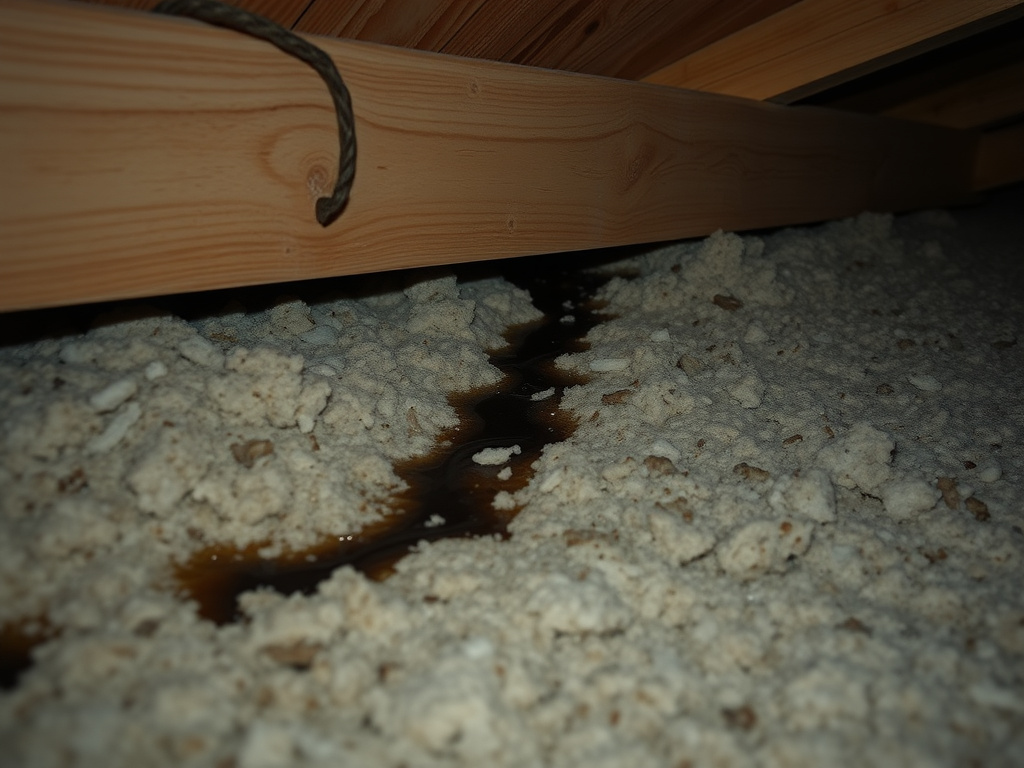
Why Wet Cellulose Insulation Can't Just Dry Out
Cellulose insulation is a paper-based product, and once it gets fully saturated, letting it dry out doesn't restore it. Wet cellulose compacts and mats down as it dries, losing much of the loft that gave it its R-value in the first place. Even if mold never develops, a soaked section of insulation that dries out on its own typically performs at a fraction of its original rating afterward.
Mold is usually the bigger issue anyway. Cellulose is treated to resist mold when it's installed, but that resistance isn't permanent. Once the material stays wet for an extended period, mold can take hold, and at that point the insulation isn't something you dry and put back to work — it's something you remove.
This is a different situation than a settled, aged attic that simply needs a routine removal. Water and mold damage are active problems that keep getting worse the longer they sit, which is why we treat these calls with more urgency than a standard old-insulation job — the same square footage costs more to fix a month from now than it does today.
How Water Gets Into Attic Insulation
Water finds its way into attic insulation through a fairly short list of repeat offenders, and identifying which one caused your problem matters for what happens after removal.
Condensation in particular tends to get missed because there's no obvious leak to point to — the damage looks like it just happened, when really it's been building for months. Poor attic ventilation is often the underlying factor that turns normal household humidity into a chronic condensation problem, which is worth mentioning to whoever addresses the moisture source once removal is complete.
- Roof leaks — missing shingles, failed flashing, or aging roofing material letting water through during storms
- Ice dams — meltwater backing up under shingles in winter and running into the attic space
- Condensation — warm, moist household air meeting cold roof decking in a poorly ventilated attic, soaking insulation from below with no roof leak involved at all
- Plumbing or HVAC issues — a slow leak from a bathroom vent, condensate line, or attic-mounted unit
Signs Your Insulation Has Mold or Water Damage
Some water damage is obvious, like a stained ceiling or a visible drip during a storm. A lot of it isn't, especially condensation-driven damage that starts in the attic and works its way down slowly over a season or two.
If any of this sounds familiar, it's worth an inspection before the affected area spreads — mold moves through a loose-fill attic faster than most homeowners expect. Loose-fill cellulose doesn't stop mold growth at a clean edge, so what looks like a small, contained patch from the attic hatch is often larger once a professional actually gets in and moves material aside.
- Musty or earthy odor noticeable from the attic hatch or even in upstairs rooms
- Visible dark spots, discoloration, or matting in the insulation
- Water stains on roof decking, rafters, or the underside of the roof sheathing
- Insulation that feels damp, heavy, or compressed compared to surrounding areas
- Higher indoor humidity or condensation on upstairs windows in winter
Why Mold Takes Hold So Easily in Cellulose
Cellulose's plant-fiber composition is the same thing that makes it a good, eco-friendly insulator, and it also makes it an excellent food source for mold once conditions are right: moisture plus time. The borate treatment added during manufacturing gives it some mold resistance, but that treatment is meant for normal attic humidity swings, not sustained saturation from a leak or chronic condensation. Once cellulose has been wet long enough for mold to establish, the borate protection isn't holding it back anymore.
Fiberglass insulation, by comparison, doesn't feed mold the way a paper-based product does, which is one reason water-damaged attics sometimes end up switched to a different material during re-insulation rather than replaced with the same product. It isn't that cellulose is a bad choice generally — it's that a home with a recurring moisture problem is a specific case worth weighing differently.
What Happens If You Leave It
Leaving mold-affected insulation in place doesn't just risk further mold growth — it actively holds moisture against the roof decking and framing, which is exactly the condition that leads to wood rot and structural issues over time. The insulation itself also keeps losing R-value the longer it sits wet or matted, so the energy-cost impact compounds right alongside the health and structural concerns.
There's also an air-quality angle that's easy to underestimate. Attic air exchanges with the rest of the house more than most homeowners realize, particularly through recessed lighting, attic hatches, and shared HVAC returns, so mold spores sitting in the insulation don't necessarily stay contained to the attic space.
This is one of the clearer cases in insulation removal where waiting tends to make the job bigger and more expensive, not smaller.
How We Remove Mold-Affected Insulation
Mold-affected and water-damaged cellulose gets extracted the same way contaminated insulation does: HEPA-filtered vacuum-truck extraction under negative pressure, so mold spores and fine particulate are captured rather than stirred into the air inside the house. The crew works the affected area, plus a reasonable margin around it since mold and moisture rarely stay inside a perfectly clean boundary, and extracts directly into sealed containment on the truck.
Once the insulation is out, we assess the exposed roof decking and framing for visible mold or staining and can pair the job with antimicrobial treatment of those surfaces before anything new goes back in.
- HEPA-filtered vacuum-truck extraction under negative pressure, capturing spores rather than releasing them
- Affected area plus a reasonable margin extracted, not just the visibly worst section
- Visual assessment of framing and decking once the attic is empty
- Antimicrobial treatment of exposed surfaces available where warranted
We Stay in Our Lane: Flagging, Not Fixing, the Moisture Source
We remove the insulation and address surface mold on decking and framing — we don't do roofing repair or plumbing work. If your attic has an active leak, a failed vent boot, or a plumbing issue feeding the moisture, we'll point out exactly what we're seeing and where, so you can get that piece fixed by the right trade. Removing insulation without addressing the water source just means the same problem comes back in the next batch of material.
We'd rather be straight with you about that up front than quietly reinstall insulation over an unresolved leak. In practice this usually means a short, plain-language note about what we observed and where — roof decking that looks compromised near a specific rafter bay, a vent boot that isn't sealed, a bath fan venting into the attic instead of outside — so you have something concrete to hand to a roofer or plumber rather than a vague "there was some water damage up there."
Re-Insulating After a Moisture Problem
Once the moisture source is addressed and the attic is dry, what goes back in is worth a real decision rather than a default choice. Cellulose can go back into the same attic without issue once the leak is fixed, but if moisture has been a recurring problem, blown-in fiberglass or spray foam's lower moisture retention may be a better long-term fit. We'll walk through the tradeoffs for your specific situation rather than pushing one product by default.
Mold & Water Damage Removal questions, answered
Attic mold should always be addressed. Beyond the air-quality concerns for the rest of the house, moldy cellulose has already lost most of its insulating value at that point and won't dry back to usable condition, so removal is generally the right call once mold is confirmed rather than a wait-and-see approach.
Cost depends on how much insulation and framing area is affected, along with how accessible the attic is, so we set the removal-and-decontamination scope after an on-site look rather than guessing over the phone. Small, localized mold from a single leak costs far less to address than mold that's spread across a whole attic.
Cellulose is treated at the factory to resist mold under normal attic conditions, but that resistance breaks down once the material gets and stays wet for an extended period. At that point it's no longer just a mold-resistant material sitting in your attic — it can actively support mold growth, which is the real trigger for removal rather than routine age alone.
There's no fixed replacement schedule — it's driven by settling and compaction, any moisture events the attic has been through, and straightforward age. A roof leak or a season of condensation can push an attic toward replacement years earlier than age alone would suggest, which is why an inspection matters more than a generic number.
Found Mold or Water Damage in Your Attic Insulation?
Call 844-967-5247 or email josh@contractorschoiceagency.com before it spreads further and we'll assess the damage with a straight removal plan.