Fire-Retardant Degraded Insulation Removal
Cellulose insulation is treated with a borate-based fire retardant at the factory, and most homeowners assume that protection lasts as long as the insulation itself sits in the attic. It doesn't. The retardant leaches out gradually with every humidity swing, every roof leak, and every year the insulation settles and compacts, and there's no visible sign that it's happening. This page explains what fire-retardant degradation actually is, who should be concerned, and how removal and replacement is the only real fix once it's occurred.
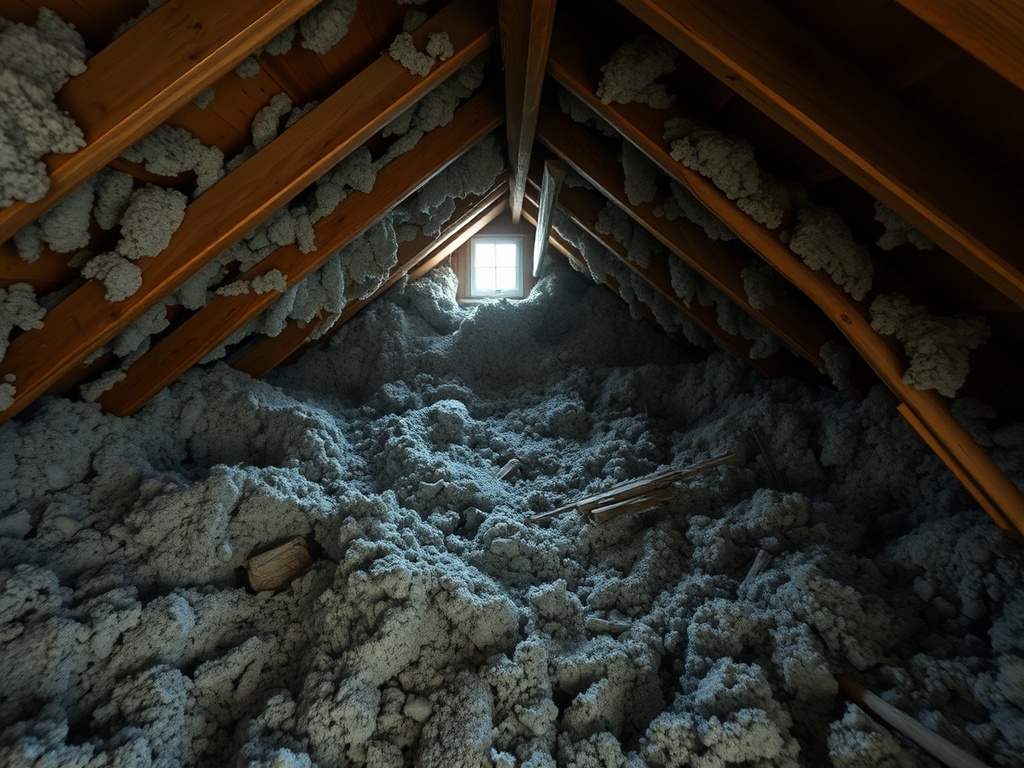
What Fire-Retardant Degradation Actually Is
Cellulose insulation is made from recycled paper fiber, and on its own, paper burns easily. Manufacturers offset that by treating cellulose with borate compounds (and sometimes ammonium sulfate) during production — chemical additives that slow ignition and combustion. That treatment is what makes cellulose a fire-safe insulation choice when it's installed correctly and fresh.
The problem is that borate is water-soluble. It's mixed into the fiber, not chemically bonded to it, which means it can migrate and leach out whenever the insulation is exposed to moisture — condensation, humidity cycling, a slow roof leak, even the everyday moisture that moves through a home's ceiling assembly over the seasons. Every wet-dry cycle carries a small amount of retardant away with it. Over enough years, the loss adds up to a meaningful reduction in fire resistance.
This is a chemistry problem, not a housekeeping problem. It has nothing to do with how clean or well-maintained an attic is, and no amount of vacuuming, fluffing, or topping-up existing insulation restores the retardant that's already gone.
It's worth being precise about what "fire retardant" means here, because it's often misunderstood. Treated cellulose isn't fireproof, and it never was — the treatment slows ignition and reduces how quickly fire spreads through the material, buying critical time in an ignition event rather than preventing fire outright. That distinction matters: as the borate leaches out, the insulation doesn't suddenly become dangerous, it gradually loses the margin of protection it was designed to provide, drifting closer to the behavior of untreated paper fiber.
Why There's No Visible Warning Sign
This is what makes fire-retardant degradation the most underestimated risk in an older attic: it doesn't show. Cellulose insulation that's lost most of its borate treatment looks exactly the same as cellulose that's fully protected — same gray-brown color, same loose fibrous texture, same coverage depth. There's no discoloration, smell, or texture change that tells you retardant levels have dropped.
Homeowners (and even many general home inspectors) have no practical way to test fire-retardant concentration during a routine attic walkthrough. It requires lab analysis of a fiber sample, which almost nobody does on a residential home. That's why age and moisture history — not appearance — are the only reliable indicators worth acting on.
This is also why the topic gets so little attention compared to more visible insulation problems. A homeowner dealing with a mold-stained ceiling or a rodent smell in the attic has an obvious reason to call someone. A homeowner with 20-year-old cellulose that looks completely normal has no prompt at all — the insulation simply sits there, quietly less protective than it was, with nothing pointing to the issue except its age.
Who Should Be Concerned
Fire-retardant degradation isn't an emergency for every attic with cellulose insulation, but a specific combination of factors raises real risk. If your home fits more than one of these, it's worth a professional look:
The 15-25+ year age window is the baseline signal used across the industry, but it's a floor, not a hard cutoff — a humid-climate attic with a documented leak history at 15 years can be in worse shape than a dry-climate attic at 25 years untouched by moisture.
- Cellulose insulation installed more than 15-20 years ago, with no record of it being replaced since
- Any history of roof leaks, ice-dam backup, or attic condensation, even if it was patched or repaired
- Homes in humid or high-rainfall climates, where moisture cycling through the attic is a near-constant condition
- Visible compaction or settling — while not a direct sign of retardant loss, it usually means the insulation has been through enough moisture and time for both issues to be present
- Homes with unknown insulation history (inherited, purchased used, or no documentation of the original install date)
Why You Can't Retreat Cellulose Insulation in Place
A common question is whether an old attic can just be sprayed or dusted with a fresh retardant treatment instead of removing everything. It can't — not effectively. There's no retrofit product on the market designed to re-treat settled, in-place cellulose fiber to factory-equivalent fire-retardant levels. Surface treatments don't penetrate a compacted, multi-inch-deep insulation layer evenly, and there's no way to verify coverage or concentration afterward without lab testing every batch.
Fire-retardant treatment is a manufacturing-stage process for a reason — it happens as the cellulose fiber is being processed, ensuring even saturation throughout the material. Once that fiber has been installed, settled, and exposed to years of moisture cycling, there's no field method that reliably restores it. The only way to get a home back to a known, fire-retardant-intact state is to remove the degraded material and install new insulation.
Our Removal & Replacement Process
Once fire-retardant-degraded cellulose is identified as the concern, our process is built to get it out completely and get a fresh, protected layer back in without leaving a compromised gap. We use industrial vacuum-truck extraction to pull the old material out of the attic — hose in, negative-pressure suction, direct containment on the truck — rather than hand-bagging, which is slower and leaves more fiber dust behind in the living space.
After extraction, we do a visual inspection of the attic framing and decking before any new material goes in, since a full removal is also the only point where the deck and framing are fully visible and inspectable. From there, re-insulation is installed to the coverage depth your home needs, using fresh material with intact fire-retardant treatment from the manufacturer.
Because this is a removal-and-decontamination service rather than anything else, there's nobody to negotiate with and nothing to file — it's a straightforward scope-and-quote conversation about what your attic needs.
What Happens If You Don't Address It
Fire-retardant degradation doesn't cause a fire on its own — it removes a layer of protection that was there for a reason. A home with intact-retardant cellulose has meaningfully slower ignition and combustion characteristics in the attic space than one with leached-out retardant, which matters most in scenarios involving electrical faults, chimney proximity, or any ignition source near the attic assembly.
Beyond the fire-safety angle, insulation old enough to have lost significant retardant has typically also lost R-value from the same settling and moisture exposure, so addressing it tends to solve an efficiency problem at the same time as a safety one.
What a Professional Assessment Covers
Because retardant loss isn't visible, our assessment leans on the indicators that actually correlate with it: documented or estimated install age, any known moisture events, attic ventilation quality, and general condition of the existing insulation layer. We walk the attic in person rather than trying to estimate risk over the phone, since compaction, staining, and airflow patterns all give useful context even without a lab test.
From there we talk through what we're seeing in plain terms — whether the age and moisture profile put your attic in the range where removal makes sense, or whether the insulation is young enough and dry enough that this isn't yet a concern. Not every older attic needs immediate action, and we'd rather tell you that than push a job that isn't warranted yet.
Fire-Retardant Degradation questions, answered
There's no fixed expiration date, but borate fire retardant leaches out gradually through moisture exposure and settling, and it typically becomes unreliable well before the insulation shows any visible wear. Industry guidance treats 15-25+ years as the window to start taking it seriously, with humid climates and any roof-leak history pushing that timeline earlier. Because there's no visual test, age and moisture history are the only practical signals homeowners have to go on.
Cellulose typically performs well for 20-30 years before settling, moisture cycling, and fire-retardant degradation add up to a genuine case for replacement. That lifespan shortens significantly if the attic has had leaks, high humidity exposure, or was underinstalled from the start. It's a range, not a countdown clock — an on-site look at the specific attic gives a far more accurate answer than a generic number.
There's no fixed replacement schedule for cellulose insulation — it's driven by a combination of settling and compaction, any moisture events the attic has been through, and straightforward age. Two homes with cellulose installed the same year can be in very different condition depending on climate and leak history. An inspection is the only way to get a real answer specific to your attic rather than a generic industry number.
No — there's no retrofit product that reliably re-treats settled, in-place cellulose fiber to factory-equivalent fire-retardant levels. Surface treatments can't penetrate a compacted insulation layer evenly, and there's no practical way to verify the treatment worked without lab testing. Removal and replacement with fresh, retardant-intact material is the only method that restores a known level of fire protection.
Related services
Get Your Attic's Fire-Retardant Age Assessed
Call 844-967-5247 or email josh@contractorschoiceagency.com to schedule a removal and replacement quote for aging cellulose insulation.