What to Install After Cellulose Insulation Removal
Pulling out old, contaminated, or degraded insulation is only half the job — the other half is deciding what goes back in. This page compares the main re-insulation options homeowners choose after a cellulose removal, in plain terms, so you can have an informed conversation with your crew instead of just taking whatever's fastest. There's no universally correct choice — the right material depends on why the old insulation came out, your climate, and what you're trying to solve going forward.
Why Re-Insulation Belongs in the Same Visit
An attic that's had its insulation removed and nothing put back is exposed — no thermal barrier, no protection against dust and outside air moving into your living space, and in humid climates, a bare deck that's more prone to condensation. Scheduling re-insulation as a follow-up visit weeks later means living with that gap in the meantime and paying for a second mobilization.
Handling removal and re-insulation in the same visit means the crew and equipment are already on-site, the attic gets inspected and cleared before anything goes back in, and you're not left guessing how long a bare attic is safe to leave alone.
There's also a practical inspection benefit to doing it this way. With the old insulation out, the framing, decking, and any past problem areas are fully visible for the first time in years. That's the right moment to confirm nothing was missed — a small leak stain, a gap that let rodents in, a soft spot in the decking — before it gets covered up again by fresh insulation.
Option 1: Blown Cellulose Again
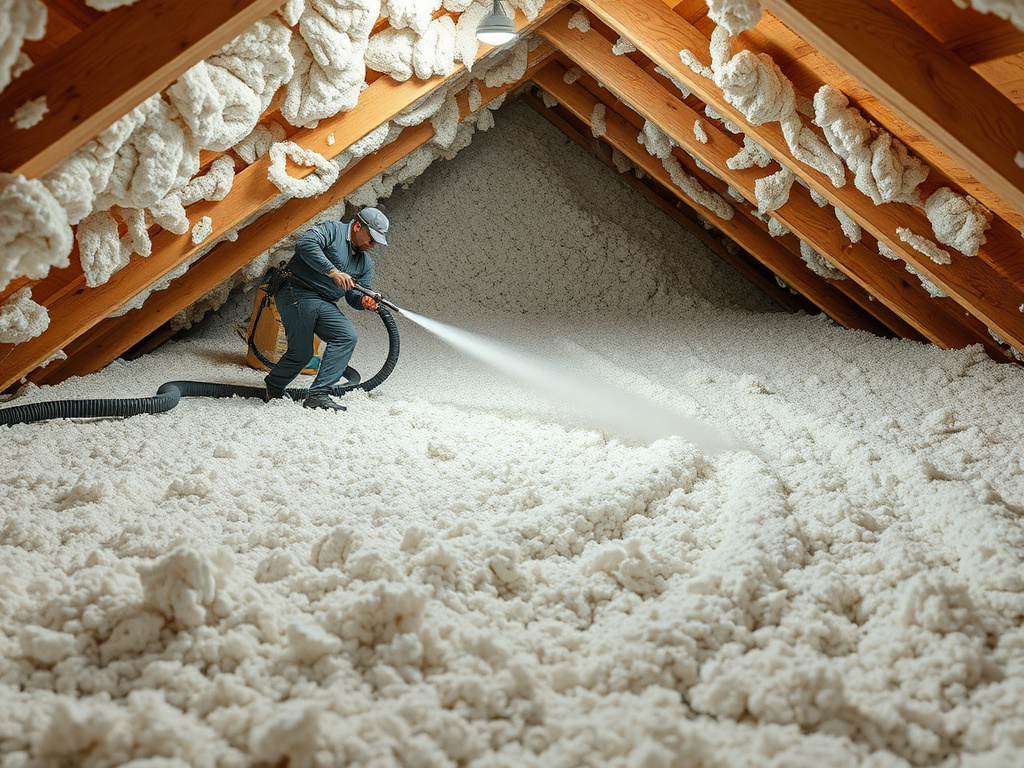
Going back in with fresh blown cellulose is the most common choice, especially when the original removal was driven by age or settling rather than contamination. It's made from recycled paper fiber treated with a fire retardant, it's cost-effective per R-value, and it's a familiar, well-understood material for attic insulation.
The tradeoff: cellulose is still a paper-based product, so it carries the same long-term considerations as what you just had removed — it can settle over time and, like any cellulose, its fire-retardant treatment isn't permanent. That doesn't make it a bad choice; it just means it's not automatically the answer if what drove your removal was a rodent or moisture problem you don't want to repeat.
For homes where the original removal was purely age-related — no contamination, no leak history, just a decades-old attic that needed a refresh — fresh cellulose is often the simplest, most cost-effective way to restore full performance without changing anything else about how the attic is built or ventilated.
Option 2: Blown-In Fiberglass
Blown-in fiberglass is a common alternative for homeowners who want a material less prone to the moisture-related issues that affect cellulose. Fiberglass doesn't absorb and hold water the way paper fiber does, so it's less likely to become a mold-growth medium if your attic sees a future leak, and it doesn't carry the same fire-retardant-degradation timeline as cellulose.
It typically has a slightly lower R-value per inch than cellulose, meaning you may need a bit more depth to hit the same performance target, and it settles less over time. For attics with a documented moisture history, fiberglass is worth a real look.
Fiberglass is also generally less appealing as nesting material than cellulose, since it doesn't offer the same soft, packable texture rodents look for — a secondary consideration, not a primary reason to choose it, but worth knowing if your removal was rodent-driven.
Option 3: Spray Foam
Spray foam — closed-cell in particular — offers the highest R-value per inch of the three options and adds air-sealing that loose-fill materials don't provide on their own, since it expands to fill gaps and cracks as it cures. That combination of insulation and air-sealing in one step is why it's often the highest-performing option for attics that also have air-leakage problems.
It's also the most expensive option per square foot, and it's a different kind of job — professional application, cure time, and it's not something that gets topped up loose the way cellulose or fiberglass can be later. It's worth considering seriously if you're already investing in a full removal and want to maximize performance in one visit, but it's not the default pick for every attic.
Rodent and Moisture Resistance: A Real Consideration After Contamination
If your removal was driven by a rodent problem, it's worth having a direct conversation about what goes back in and how the attic gets sealed. No loose-fill insulation is truly rodent-proof on its own — the real fix for keeping rodents out is sealing entry points, which is part of decontamination, not a property of the insulation material itself. That said, dense-pack installation and certain treated products resist nesting better than standard loose-fill cellulose, and it's worth weighing if this is a recurring issue for your home.
Spray foam's rigid, cured structure is generally the least hospitable to nesting of the three options, which is one more reason it comes up in conversations after a rodent-driven removal — though sealing entry points matters more than material choice either way.
If your home has had a repeat rodent problem over multiple seasons, it's worth mentioning that history during your assessment. It changes the conversation from just picking a material to also making sure the exclusion work — sealing gaps around vents, eaves, and utility penetrations — happens before new insulation goes in, so you're not paying to re-insulate the same attic again in a year or two.
R-Value Per Inch, Explained Simply
R-value measures resistance to heat flow — higher means better insulating performance per inch of material. Spray foam (closed-cell) generally delivers the most R-value per inch, cellulose comes in above standard fiberglass batts, and blown fiberglass typically needs slightly more depth than cellulose to match the same R-value. None of these numbers matter in isolation — what matters is hitting the total R-value recommended for your climate zone, which your crew can walk you through based on your specific attic.
It's also worth remembering that R-value per inch is only one variable. Coverage depth, how evenly material is distributed across the attic floor, and whether gaps or thin spots are left around edges and penetrations all affect real-world performance just as much as which material you picked. A well-installed lower-R-value material can outperform a poorly distributed higher-R-value one.
What This Costs Compared to Removal Alone
Adding re-insulation to a removal job increases the total price of your project, but bundling it into the same visit is generally more cost-effective than paying for two separate mobilizations later. The exact cost swings with the material you choose — cellulose and fiberglass are typically closer in price per square foot, while spray foam runs higher due to material and application labor — plus the R-value you're targeting for your climate zone and the square footage being covered.
We don't publish a flat price for re-insulation for the same reason we don't for removal: it depends on your attic and your material choice. Our cost guide walks through the removal-side cost drivers in more detail, and your free assessment covers re-insulation pricing alongside removal so you're looking at one complete number, not two separate estimates to reconcile.
How We Help You Decide
There's no single right answer for every home — it depends on your budget, your climate, whether contamination was part of why the old insulation came out, and what you're trying to solve going forward. During your free assessment, we'll walk through your options in the context of your specific attic and give you a straight recommendation, not just a menu.
Call 844-967-5247 or email josh@contractorschoiceagency.com to talk through what makes sense for your home.
Re-Insulation Options questions, answered
It depends on your goals: blown cellulose is cost-effective and familiar, blown-in fiberglass resists moisture and mold better, and spray foam delivers the highest R-value per inch plus air-sealing. We'll walk through the tradeoffs for your specific attic during your free assessment.
Yes, if the old material is contaminated, compacted, or degraded — installing new insulation on top of a compromised layer just traps the underlying problem instead of solving it. If your existing insulation is simply a bit low but otherwise clean and undamaged, a top-up may be enough, which a quick inspection can confirm.
Densely packed and certain treated materials tend to resist nesting better than standard loose-fill cellulose, and spray foam's cured structure is generally the least hospitable of the common options. That said, sealing entry points during decontamination matters more for keeping rodents out long-term than the insulation material alone.
In most cases, yes — for example, topping fiberglass batts with blown cellulose is common. What matters more is making sure the old layer is clean and in good condition before anything goes on top of it, which is exactly what removal and inspection are for.
Let's Figure Out What Goes Back In
Get a free assessment and a straight recommendation for re-insulating your attic after removal.