Attic Decontamination & Sanitizing
Pulling out old or contaminated insulation is only half the job. What's left behind in the attic — rodent droppings ground into the framing, urine odor in the wood, mold spores on the decking — has to be addressed directly, or new insulation just gets installed over the same problem. Attic decontamination and sanitizing is the distinct step between removal and re-insulation, and it's what actually gets your attic back to a clean, livable-adjacent condition, not just an emptied one.
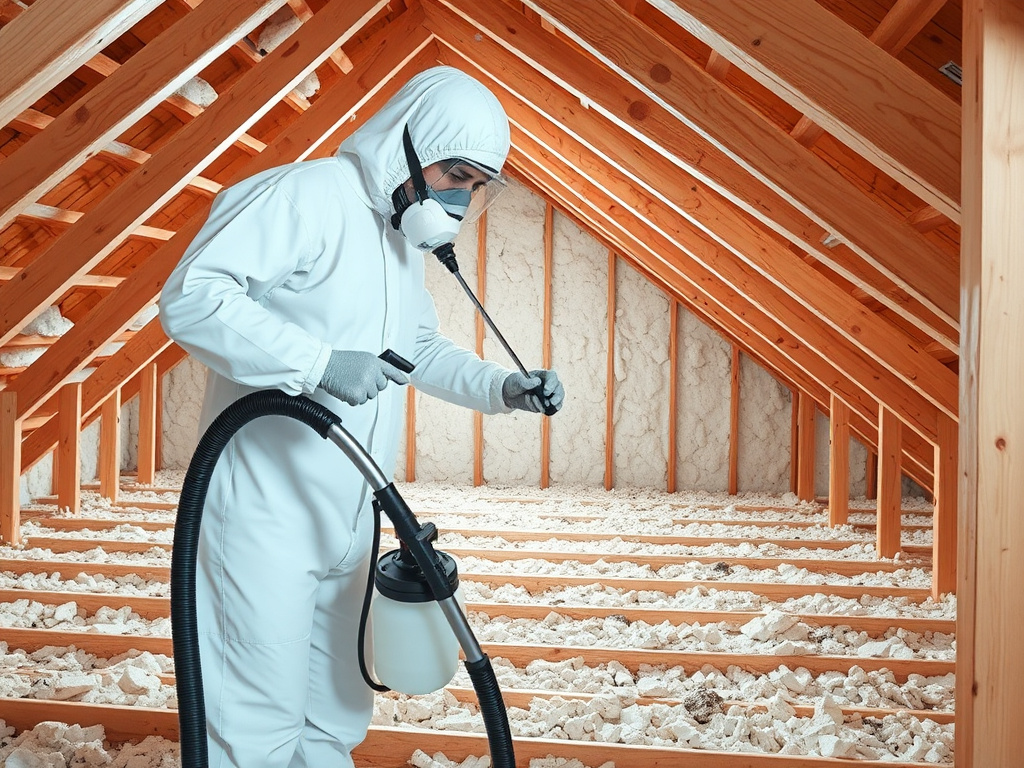
Why Decontamination Is a Separate Step, Not a Freebie
A lot of homeowners assume that once the old insulation is vacuumed out, the attic is done — the mess is gone, so the job is finished. That's true for a plain "old and settled" removal with no contamination history. It is not true once rodents, mold, or water damage have been part of the picture.
Insulation absorbs and holds whatever has been in the attic with it. Rodent urine and droppings work their way past the fiber and into the framing and roof decking underneath. Mold spores settle on every exposed wood surface, not just the insulation layer. Removing the insulation takes out the bulk of the material, but it doesn't touch what's already soaked into or settled onto the structure itself. That's exactly why decontamination is priced and scoped as its own line item — it's genuinely more work, with different tools and different expertise, than extraction alone.
This is also where a lot of competitor removal jobs fall short. A crew that pulls insulation out and calls the job done is leaving behind exactly the material that caused the odor, staining, or health concern in the first place. Decontamination is what actually closes that gap — it's the difference between an attic that's been emptied and one that's genuinely been cleaned.
HEPA Vacuuming of Framing & Decking
Once the bulk insulation is out, the attic framing, joists, and roof decking are fully exposed for the first time — usually since the original construction. We go over every accessible surface with HEPA-filtered vacuum equipment, capturing fine dust, dried droppings, dander, and debris that a standard shop vacuum would just recirculate back into the air.
This step matters most in rodent-contaminated attics, where dried droppings and urine residue cling to framing members and can aerosolize if disturbed later. HEPA filtration traps particles down to the size that matter for air quality, rather than just moving visible debris around.
A standard shop vacuum or household vacuum isn't built for this. Most consumer and even contractor-grade vacuums without HEPA filtration exhaust fine particulate right back into the air through the motor housing, which means a well-intentioned but wrong-equipment cleanup can actually make airborne contamination worse rather than better. This is a hazard-handling step, not a general tidy-up, and it's treated that way throughout the process.
Enzymatic Treatment for Urine Odor
Rodent urine doesn't just smell bad — it soaks into wood grain and insulation fiber in a way that ordinary cleaning products don't reach. Masking sprays and general disinfectants sit on the surface and fade within days. Enzymatic cleaners work differently: the enzymes actually break down the organic compounds in the urine that cause the odor, rather than covering the smell temporarily.
We apply enzymatic treatment directly to affected framing and decking surfaces after HEPA vacuuming, targeting the areas where staining or odor concentration is visible. This is the difference between an attic that smells clean because odor-causing material was actually broken down, and one that smells fine for a week before the odor returns.
Odor is also a useful diagnostic on its own. Persistent ammonia-like smell after insulation has been removed is usually a sign that urine has soaked into the wood itself, not just the insulation that sat against it — which is exactly the scenario enzymatic treatment is built to address, since it works on porous wood surfaces the same way it works on fiber.
Antimicrobial Fogging for Mold Spores
Mold spores don't stay confined to the insulation they grew in — they settle across every attic surface, including areas that look unaffected. Antimicrobial fogging distributes a fine mist of EPA-registered antimicrobial solution throughout the attic space, reaching into corners, seams, and surface texture that a wipe-down or spray bottle can't cover evenly.
This step is standard on any job where mold growth was present in the removed insulation or visible on framing, regardless of how contained the growth appeared. Mold-affected jobs are also paired with a note on the moisture source that allowed the growth in the first place — identifying it is part of decontamination, though correcting a roof or plumbing issue itself is outside our scope and gets referred to the right trade.
Sealing Entry Points So the Problem Doesn't Return
Decontaminating an attic that rodents got into once, without addressing how they got in, is a temporary fix. As part of the process, we identify visible entry points — gaps around vent boots, soffit damage, gaps where utility lines penetrate the roofline, and similar access points — and seal what's reasonably accessible during the job.
This isn't a substitute for a full pest-exclusion service if a property has an active, ongoing infestation problem beyond the attic, but for the entry points directly tied to attic access, sealing them is a standard part of getting a decontaminated attic to actually stay that way. Skipping this step is one of the most common reasons a rodent problem returns within a year or two of an otherwise thorough removal — the attic gets cleaned out, but the access point that let rodents in the first time is never closed.
- Gaps around roof vents, soffits, and eaves
- Openings where plumbing, electrical, or HVAC lines penetrate the attic
- Damaged or gapped fascia and roofline seams
- Any visible chew-through points identified during the removal walkthrough
What 'Decontaminated' Actually Means
"Decontaminated" gets used loosely across this industry, so it's worth being specific about what it means on our jobs: all visible contamination removed from the attic, framing and decking cleared of dust and residue via HEPA vacuuming, odor addressed at the source with enzymatic treatment, and any mold-affected surfaces treated with antimicrobial fogging. That's the standard we're working to on every job with a contamination history.
We also do a visual walkthrough with the homeowner (or provide photo documentation when an in-person walkthrough isn't practical) so you're seeing the same cleared attic we are, not just taking our word for it. Insulation goes back in only after this stage is complete, which is deliberate — installing new material over a space that hasn't been fully addressed defeats the purpose of decontaminating in the first place.
How This Affects Job Cost and Timeline
Decontamination adds real time and material cost on top of straightforward removal, which is why a rodent- or mold-driven job is priced differently than a routine old-insulation removal. HEPA vacuuming of every framing surface, enzymatic application, and fogging all take dedicated time beyond the vacuum-truck extraction itself.
We scope this on-site rather than guessing over the phone, since the extent of contamination — how much framing area is affected, how concentrated the odor or mold is — varies a lot from attic to attic. What's consistent is that decontamination is never skipped on a contaminated job; it's the step that determines whether the space is actually ready for new insulation.
For context on why the scoping matters: a small attic with light, localized rodent activity near one soffit is a very different job from a full-attic infestation with droppings and nesting spread across the entire floor. Both get the same decontamination steps in principle, but the labor time and material use scale with the actual footprint of contamination, which is exactly why we walk the space in person before quoting rather than pricing off a phone description.
Attic Decontamination questions, answered
The process runs in a specific order: HEPA vacuuming of the framing and decking to remove dried droppings and dust, enzymatic treatment applied to break down urine odor at the source, and antimicrobial fogging if any mold growth was present. All of this happens after the contaminated insulation itself has been fully removed, not before — cleaning around insulation that's still in place doesn't get to the material actually holding the contamination.
A thorough attic decontamination combines HEPA-filtered vacuuming of every exposed surface, enzymatic odor treatment on affected framing, antimicrobial fogging for mold spores, and sealing of any rodent entry points found during the job. Each step targets a different kind of residue — dust and droppings, absorbed odor, airborne spores — so skipping any one of them leaves part of the contamination behind.
We use EPA-registered antimicrobial solutions applied via fogging for mold and spore control, paired with enzymatic cleaners specifically formulated to break down organic urine residue rather than a generic all-purpose disinfectant. General household cleaners aren't built to penetrate wood grain or break down biological odor compounds the way enzymatic treatments are, which is why the two are used for different jobs within the same decontamination pass.
If your attic had rodent activity, mold growth, or water damage, decontamination is worth it because new insulation installed over an unaddressed contamination problem just traps that problem underneath it. Skipping decontamination doesn't save the cost long-term — it usually means the odor, mold, or contamination resurfaces and has to be dealt with again, on top of the insulation that already needs replacing.
Get Your Attic Fully Decontaminated, Not Just Emptied
Call 844-967-5247 or email josh@contractorschoiceagency.com to scope a decontamination and sanitizing job alongside your removal.