Cellulose Insulation Removal Services
Cellulose insulation doesn't fail all at once — it settles, compacts, and quietly loses R-value over years until an attic that once tested fine is now leaking heat, dust, and money. This page covers our full-service cellulose insulation removal process for homes where the insulation itself is simply old, worn out, or underperforming. If your attic has a specific rodent, mold, or fire-retardant issue, we've built dedicated pages for those situations — this hub covers the general signs, process, and cost drivers that apply to every removal job.
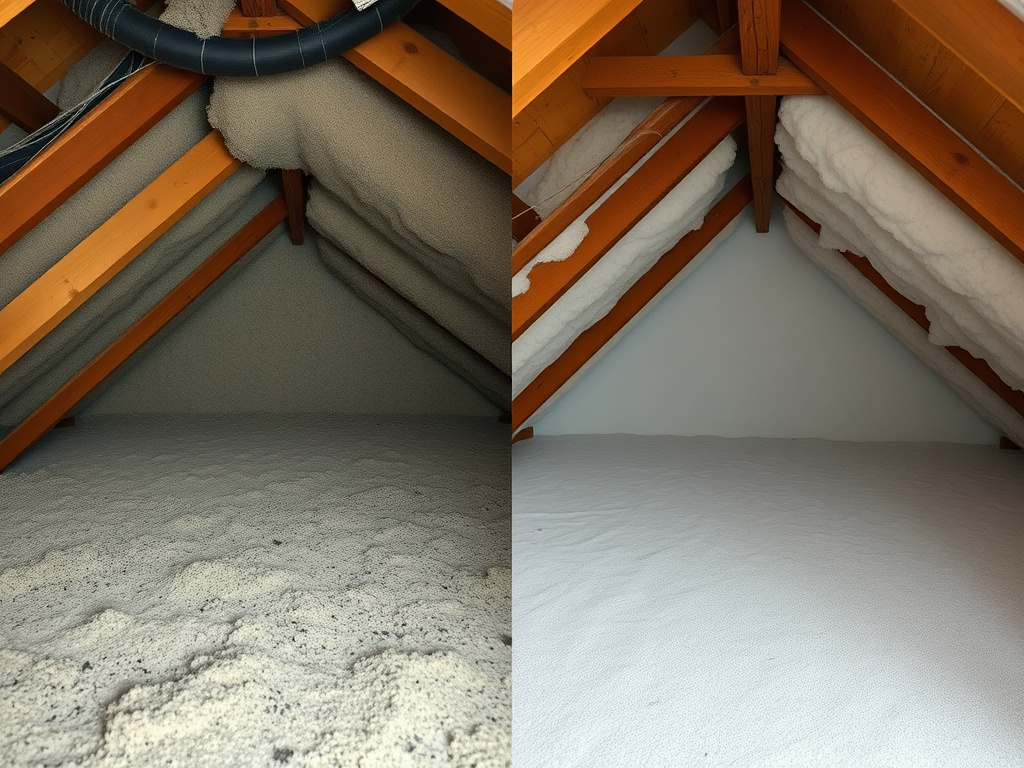
What Cellulose Insulation Is, and Why It Wears Out
Cellulose insulation is made from recycled paper fiber, mostly ground-up newsprint, treated with a borate-based fire retardant and installed as a loose-fill product blown into open attics or dense-packed into wall cavities. It's a solid, cost-effective insulator when installed correctly, but as a paper-based material it ages very differently over 20-30 years than fiberglass or spray foam.
Three separate processes work against it at the same time. It settles under its own weight, losing up to roughly 20% of its original loft and insulating value without any visible change from the attic hatch. It goes through moisture cycling as attic humidity swings expand and contract the fibers, which accelerates compaction and sets up the conditions for mold. And its borate fire retardant leaches out gradually with repeated moisture exposure and age, quietly reducing fire resistance in a way that has no visual warning sign.
None of these three processes announce themselves. An attic can look perfectly normal from the hatch — same gray-brown fill, same general depth — while performing well below its rated R-value underneath. That's part of why insulation removal gets overlooked for so long compared to something like a roof or a water heater: there's no obvious failure point, just a slow, cumulative decline that shows up as higher bills and a less comfortable house rather than a single breaking moment.
- Settling and compaction reduce insulating value without any visible change from below
- Moisture cycling accelerates compaction and raises mold risk over time
- Borate fire retardant degrades gradually with age and humidity, not with visible wear
Signs Your Cellulose Insulation Needs to Come Out
Most homeowners don't get a single clear warning — they get a stack of smaller signals that add up over a few years. Any one of these on its own is worth a professional look. Two or more together, especially age combined with a moisture history, is a strong case for full removal rather than a simple top-up.
- Attic insulation looks thin, patchy, or noticeably lower than it used to be
- Dust or fibrous debris showing up in living space air, closets, or around recessed lighting
- Energy bills have crept up with no other clear explanation
- The insulation is more than 20 years old, especially if the attic has ever had a roof leak
- Allergy or respiratory symptoms that flare worse indoors than outdoors
When Your Attic Needs More Than a Standard Removal
This page covers the general case: cellulose insulation that's simply old, settled, or underperforming, with no active contamination event. If your attic has any of the situations below, it's a different job with different safety requirements, and we've built dedicated pages that explain exactly what changes and why.
We ask about all of this before ever giving a quote, because it affects the PPE, containment, and disposal handling required for the job — not just the price.
- Rodent droppings, urine staining, or nesting material in the insulation — see our rodent and biohazard-contaminated insulation removal page
- A roof leak, condensation problem, or visible mold growth in the cellulose — see our mold and water-damaged insulation removal page
- Insulation older than roughly 20 years, especially with any moisture history, where fire-retardant loss becomes a real concern
How Professional Cellulose Insulation Removal Works
The industry-standard method for loose-fill cellulose is vacuum-truck extraction, not manual bagging. A commercial vacuum truck parks in the driveway, a hose runs up into the attic through an access point, and the crew works the space in sections, extracting insulation directly into a sealed containment tank on the truck under negative pressure.
Inside the house, dust control is set up at the attic access point before anything starts, and the negative-pressure design means air and dust are being pulled up and out through the hose rather than pushed back down into your living space. Most single-family attics take somewhere between 2 and 5 hours from setup to teardown, depending on square footage, accessibility, and how much material is coming out.
This is also the point where most first-time customers are the most nervous, and understandably so — a truck in the driveway and a hose running through the house sounds disruptive. In practice, the crew works from the attic access point outward, floors and doorways along the path get protected, and the vacuum system's containment means very little material is ever exposed inside the living space at all. Most homeowners are able to go about a normal day in the rest of the house while the crew works overhead.
What Happens After the Old Insulation Is Out
Removal is step one, not the whole job. Once the attic is empty, framing and decking get a visual check and a light cleaning pass, any obvious issues like gaps or minor pest entry points get flagged, and the space is ready for new insulation, whether that's cellulose, fiberglass, or spray foam. If your job started with a rodent or mold problem, that step is a lot more involved — see our attic decontamination process for the full breakdown.
We bundle re-insulation into the same visit whenever possible, because leaving an attic empty and exposed between removal and re-insulation isn't good for the house or convenient for you.
Why DIY Removal Usually Costs More Than It Saves
A rented insulation vacuum can genuinely work for a small, uncontaminated attic if you're comfortable working in a hot, confined space for a weekend. Where it falls apart is scale and mess: rental vacuums move far less air and material per hour than truck-mounted equipment, so the same job takes several times longer, and it's easy to blow fine cellulose dust back into the living space through the attic hatch if containment isn't set up correctly.
For a straightforward, uncontaminated attic, DIY removal can be a reasonable choice. Once age, moisture history, or any sign of pests enters the picture, professional removal tends to be the cheaper option once you count the time, equipment rental, and disposal trips it actually takes.
- Rental equipment moves far less air and material per hour than a truck-mounted vacuum system
- Homeowners working alone have no negative-pressure containment, so dust control is much harder
- Once any contamination is involved, DIY removal isn't a cost question — it's a safety one
What Drives Cellulose Insulation Removal Cost
There isn't a single number that applies to every attic, and we're not going to publish a made-up price table — but the variables that move a quote up or down are consistent from job to job: square footage, attic accessibility, how much material is coming out, and whether the job is a plain removal or involves rodent, mold, or fire-retardant-related decontamination.
The only way to get an accurate number is a short on-site look. Call 844-967-5247 or email josh@contractorschoiceagency.com and we'll walk the attic with you before quoting anything.
- Square footage and how much insulation is currently in the attic
- Accessibility — a full walk-up attic is faster to work than a cramped, low-clearance space
- Contamination type — plain removal costs less than rodent/biohazard or mold jobs, which require PPE and decontamination
- Whether re-insulation is bundled into the same visit
What to Install After Removal
Once an attic is empty, most homeowners want to know what actually goes back in. Blown cellulose is a straightforward option if your original insulation simply aged out with no contamination history — it's cost-effective and performs well for another 20-30 years under normal conditions. Blown-in fiberglass is worth considering if moisture has ever been a factor, since it doesn't absorb water or support mold growth the way a paper-based product can. Spray foam costs more up front but adds air-sealing on top of insulating value, which can matter in an older, leakier attic.
There's no single right answer for every house — it depends on your attic's history, your budget, and what caused the removal in the first place. We'll walk through the tradeoffs specific to your situation as part of the same visit, rather than defaulting to whatever's easiest to install.
Insulation Removal questions, answered
Yes, once it's compacted or settled below effective R-value, shows any contamination, or is older than roughly 20 years with a moisture history somewhere along the way. If none of that applies, a top-up may be enough — a quick attic inspection is the fastest way to tell which situation you're actually in rather than guessing from the age of the house.
Cellulose typically performs well for 20-30 years before settling, moisture cycling, and fire-retardant degradation add up to a genuine case for replacement. That window shortens considerably if the attic has had leaks, high humidity exposure, or was underinstalled from the start, so treat it as a range rather than a fixed countdown.
Professional removal uses HEPA-filtered vacuum-truck extraction into sealed containment, not manual bagging, which is faster, far less dusty inside the home, and the only responsible option once any biohazard material like rodent droppings is involved. Extracted material goes straight into containment on the truck rather than being loose-bagged and left on-site.
A DIY vacuum rental can work for a small, uncontaminated attic if you have the time and are comfortable working in a confined space. Once rodent waste, mold, or older fire-retardant-age cellulose is in play, the PPE, containment, and proper disposal requirements make professional removal the safer choice, and often the cheaper one once your own time and equipment costs are factored in.
Ready for a Free Attic Inspection?
Call 844-967-5247 or email josh@contractorschoiceagency.com and we'll tell you exactly what your attic needs before any work starts.